www.charity-kalender.de

Wird geladen

Primates

When people think about primates most people remember lively apes playing and toying around. Yet primates are a complex generic group, starting with the 30 grams light tarsier up to the 200 kg heavy gorilla. Naturally our next relatives, the great apes, fascinate us. With the image of these lively animals in mind you can easily forget how serious their situation is in the nature. This is a core reason why we opted on this topic for the first edition of Charity-Kalender.


In total there are 496 primates species, of which more than half of them are endangered in the meantime. Alone on the island of Madagascar 101 there are species and nearly 90% of those are in a critical state. Among Asia’s 119 species there are worries regarding about two thirds of the kinds. Origin of the primates merely are in Middle and South America (new-world monkeys), in Africa and Asia (old-world monkeys).


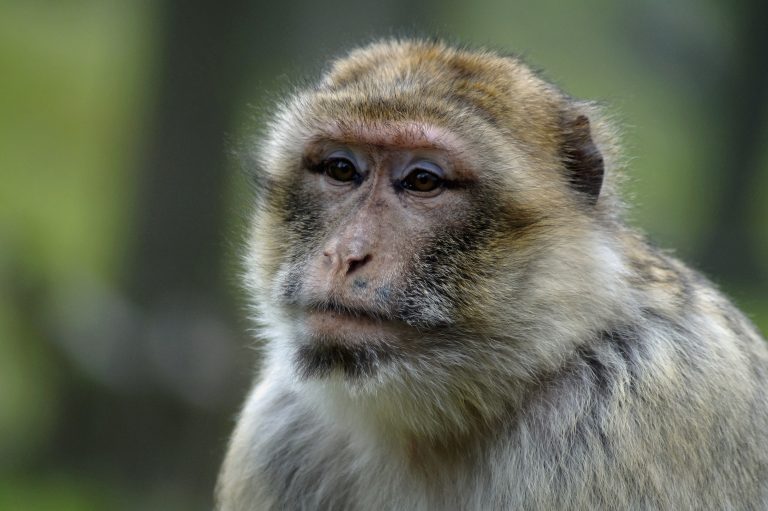
Tourists who have been to Southern Europe may protest now and say that they have seen primates in Gibraltar. This is absolutely correct. These are Barbary macaques or also called magots, which with a high probability were imported from Northern Africa. The 230 animals who live there today can be tracked back to Winston Churchill. A legend says that Gibraltar remains under British governing as long as magots live there, so Churchill imported Barbary macaques from their origin Morocco and Algeria to liven up the population that declined to only a few animals. Even though they are no real European monkeys they have a geographical specialy as they are Africa’s only primates living north of Sahara. A further unique feature: they are the only macaques, which are not home in Asia.


You might think that a monkey, which is tough enough to survive in Europe and even is a bit annoying as in Gibraltar cannot have worries, but the opposite is the case: Barbary macaques are engangered, the population decreased by more than fifty percent within the last thirty years. About 6.000 to 8.000 animals live worldwide, yet at least two thirds in Morocoo. There are two main problems for the population: one is that annually 200-300 babies are caught and illegally sold as pets. The other is the aggricultural growth, which results in lesser connected areas and separates the singular groups.


In Zoos Barabary macaques are widely spread though and form a solid reserve pool. Nice walk through enclosures can be found at NaturZoo Rheine and at Apenheul Apeldoorn. Furthermore magots are on exhibit at Arche Noah Zoo Braunschweig, Opel Zoo Kronberg, Tiergarten Nuremberg or Zoo Barcelona.


In the course of this primates campaign we will inform about further specialties of various primate species.


Berberaffe – Barbary macaque – Macaca sylvanus – NaturZoo Rheine
Berberaffe – Barbary macaque – Macaca sylvanus – Apenheul Apeldoorn

Primaten

Wenn man an Primaten denkt, haben die meisten von ihren Zoobesuchen muntere Affen vor Augen, die immer quirlig spielen und gerne schon mal Unsinn machen. Dabei sind Primaten Mehr erfahren

Good supporters base –
„Original Ten“ are found

A lot of time and preparation needs to be done from idea to realization of a project. While in the background the website is created, the social media are started, and the calendar is set, there are much needed partners, who first of all need to be convinced to take part. This is especially difficult when you have no reference so far, and the people who are supposed to help don’t know you. Under these circumstances the first Charity Calendar came alive, always with a question mark, whether or not the photo release permit will be granted.


This first phase is passed now. Analogue to sports terms we can call the founding „members“ of this project the „Original Ten“ = ten facilities, which did not hesitate to give their okay for this release within one week after my initial contact. Lots of thank yous are owed to our „Original Ten“: Zoo Osnabrück, Vogel- und Blumenpark Heiligenkirchen (Bird- and Flower Park), Zoo Miami, NaturZoo Rheine, Tiergarten Nuremberg, Royal Burgers‘ Zoo Arnhem, Tierpark Hamm, Zoo Cologne, Apenheul Apeldoorn and Tierpark Herford.


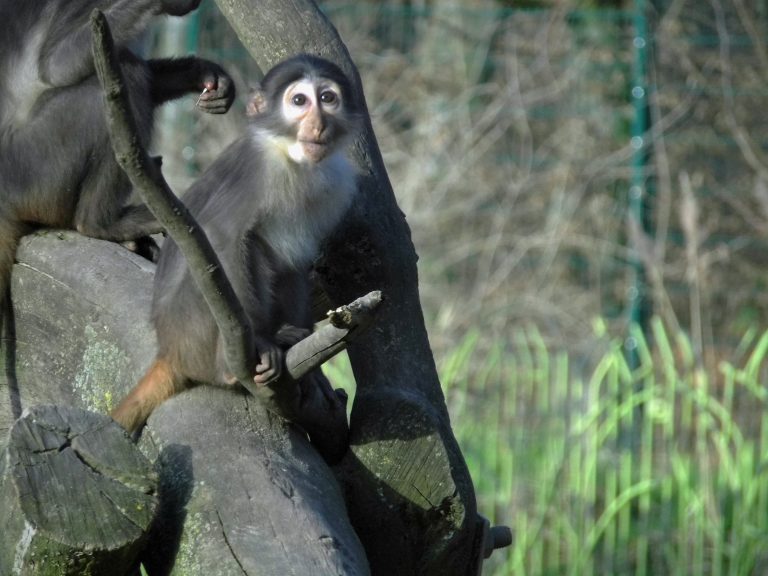
Weißscheitelmangabe- White naped mangabey – Cerocebus lunulatus – Zoo Osnabrück

About this Project

My name is Olaf Goldbecker, I was born in 1976 in Germany. Neither am I a professional photographer, nor am I a zoologist. Yet how do you get the idea for such a project, how does a German relate to primates, and why do you offer a calendar whose profit is going to species conservation projects?


Well, I have been travelling pretty much in the recent years. My main job is a merchant, on the side I am running a small sports service company. To get new and maintain old contacts it is a good idea to travel – to the USA, within Europe or within Germany. Between appointments there often is time to be filled, and I use to spend it in zoos. Animals have always interested and fascinated me. Since some years I gained a deeper insight into the work of a scientifically led zoo, which increased my interest. While visiting I do what many visitors do: I take photographs. In the course of the time there is quite an amount of photos, and alos the quality of the pictures grew, so that at some point I asked myself the question „is there anything useful you can do with these pictures?!?“


Last Christmas I donated a small calendar to family and friends, to see how the quality looks like on print. The result convinced me and so the decision grew to start an attempt establshing and marketing such a project. It was clear to me that the profit of this project has to go to the free living relatives of the models – the species living in the wild. I will document the result of this campaign here on this website.


Yet why of all animals did you opt on primates? Well, I did not want a simple animal collection, but a firm motto. Of course there would have been other options – and who knows, if this is turning to be a success it can happen that a next edition shows predators, hoofed animals or sea animals. Yet the current choice are primates. About half of all primate species are listed as endangered by IUCN, more than 10% are threatened by extinction. Next to collecting money for some of these species, it is an aim to further the knowledge on the problems these animals have, which partially could be improved by our consuming in the everyday life.


I wish everyone lots of fun with the calendar and the pictures. If you like calendar and this project I would be happy if you told other people about it and spread the word.


Olaf Goldbecker – Mensch – Human being – Homo sapiens – Sometimes here, sometimes there


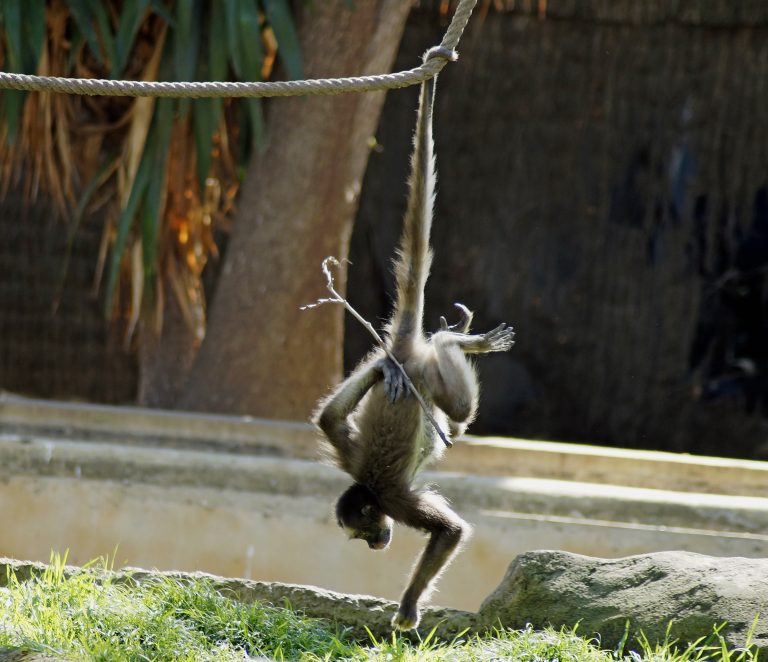
Goldstirnklammeraffe – White bellied Spider Monkey – Ateles belzebuth – Zoo Barcelona

Borneo Orangutan Survival

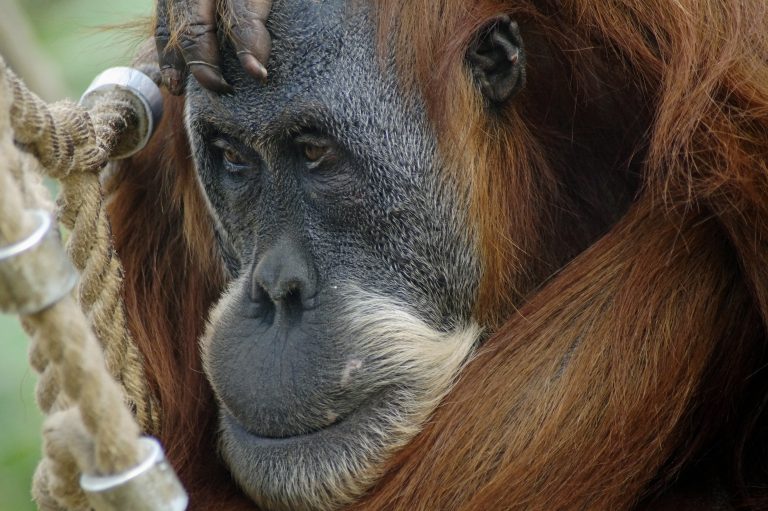
Orangutans as great apes are probably known by everyone. Not as much known is that the „wood man“ (translation of the term orangutan) is listed as critically endangered by IUCN. As endemic species, orangutans only live on the islands of Sumatra and Borneo in Indonesia – two islands, which are known for massively producing palm oil that destroys the habitat of the animals. The oil palm is very fruitful and thus a cheap product, which makes it an attractive product for the industries. 85% of the worldwide palm oil production is gained in Malaysia and Indonesia, the rain forest has to vanish for it. In nearly every household you can find products containing palm oil, e.g. in cosmetics, detergent, sweets, chocolate bars, fast food, frozen products or margarine – watch out for the list of content in your products and avoild palm oil! Yet also fuel is a problem these days. Seemingly eco-friendly fuel as Biodiesel and E10 massively contain palm oil: about 45% of the entire palm oil production in the EU is used for fuel!


Also other factors are endangering orangutans. Babies are still captured and sold on the Asian market. The capture happens by shooting the moms. Orangutans are similar to human beings and thus they can suffer similar diseases, which are brought in by human beings. All this, in combination with a slow reproduction rate leads to a decrease of about 2.000 animals each year. Given that there only are about 50.000 Bornean orangutans and 15.000 Sumatran orangutans left, this is a drastic quota.


Borneo Orangutan Survival fights against the extinction of a first kind of great apes. In Borneo BOS operates two rescue and rehabilitation centres, which host about 800 animals. Aim is to release all orangutans back to the wilderness who are able to survive on their own. With the help of an affiliate, BOS purchased woodlands, in which the apes can live.


Sumatra Orang Utan – Sumatran orangutan – Pongo abelii – Zoom Erlebniswelt Gelsenkirchen


Borneo Orang Utan – Bornean Orangutan – Pongo pygmaeus – Zoo Osnabrück

Pandrillus Foundation
(German affiliate)

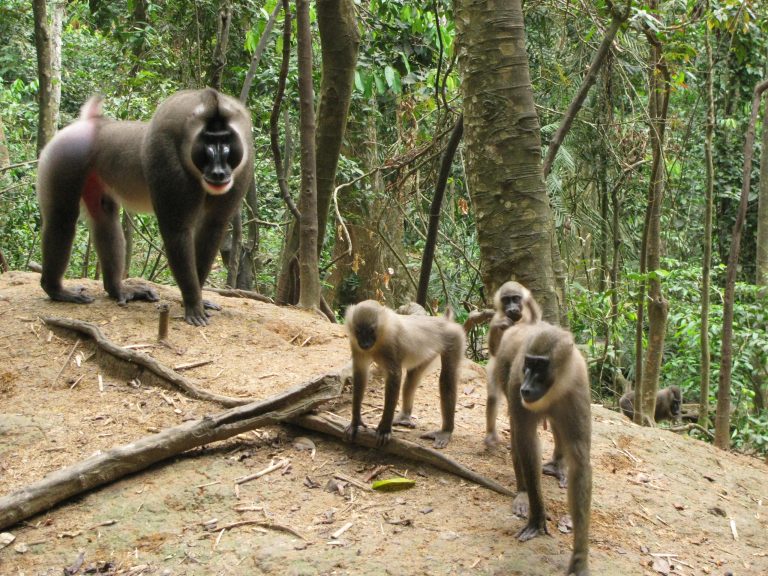
Drills are relatively unknown apes. Zoo visitors often confuse hem with baboons or their next relatives, the mandrills. The drills are mainly living on the ground, and only exist in Cameroon, Nigeria and the island Bioko Mehr erfahren

Gute Unterstützerbasis –
die „Original Ten“ stehen

Bis ein Projekt von der Idee bis zur Realisierung ans Rollen kommt, vergeht viel Zeit und Vorbereitung. Während im Hintergrund an der Website gebastelt wird, die sozialen Medien anfangen zu tickern, und der Kalender gesetzt wird, muss man vor allem die Partner von der Idee zu überzeugen und sie zum Mitmachen zu bewegen. Das ist insbesondere dann schwierig wenn es noch keine Referenz gibt, keine Bilder zu sehen – und die Leute, die einem helfen sollen, kennen einen nicht. Unter diesen Voraussetzungen ist der erste Charity-Kalender angelaufen, immer noch mit dem Fragezeichen behaftet, ob überhaupt die Freigabe für die Bilder erteilt wird, die man gerne verwenden möchte.


Diese erste Phase ist nun überstanden. Analog zum Sport, wo man Gründungsmitglieder einer Liga benennt, im amerikanischen „Originals“ genannt. sind auch für das Charity-Kalender Projekt die „Original Ten“ gefunden worden. Dies sind zehn Einrichtungen, die binnen einer Woche nach der Anfrage ihre Freigabe für das Kalenderprojekt erteilt haben. Unser herzlicher Dank geht daher an unsere Original Ten: Zoo Osnabrück, Vogel- und Blumenpark Heiligenkirchen, Zoo Miami, NaturZoo Rheine, Tiergarten Nürnberg, Königlicher Burgers‘ Zoo Arnheim, Tierpark Hamm, Kölner Zoo, Apenheul Apeldoorn und Tierpark Herford.


Weißscheitelmangabe- White naped mangabey – Cerocebus lunulatus – Zoo Osnabrück

Angebot für Ladeninhaber

Wir freuen uns wenn Ihnen unser Projekt gefällt. Noch mehr freuen wir uns wenn Sie uns unterstützen wollen. Geschäftsinhaber können dies über den Kauf der Kalender hinaus in Angriff nehmen: helfen Sie uns, indem Sie den Kalender verkaufen. Wir unterstützen Sie, indem Ihr Geschäft bei uns auf der Website als Verkaufsstelle dargestellt wird. Kontaktieren Sie uns bei Interesse und wir informieren Sie über die Konditionen.

info@charity-kalender.de 


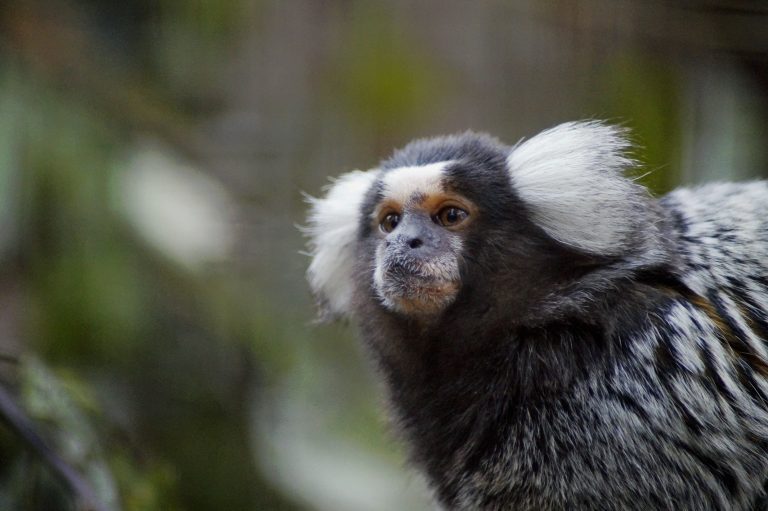
Weißbüschelaffe – Common Marmoset – Callithrix jacchus – Vogel- und Blumenpark Heiligenkirchen

Borneo Orangutan Survival
Deutschland e.V.

Als Menschenaffen sind Orang Utans wohl allen Menschen bekannt. Nicht ganz so bekannt ist, dass der Waldmensch (dt. Übersetzung des Begriffs Orang Utan) stark bedroht ist. Als endemische Art kommen Orang Utans ausschließlich auf den Inseln Sumatra und Borneo vor – zwei Inseln, auf denen massiv Palmöl angebaut wird, was den Lebensraum der Tiere zerstört. Palmöl wird von der Ölpalme gewonnen, die sehr ertragreich und damit billig in der Produktion ist, was es für die Industrie heiß begehrt macht. 85% der weltweiten Palmölproduktion wird in Indonesien und Malaysia gewonnen, wofür eben der Regenwald gerodet wird. In nahezu jedem Haushalt finden sich Produkte mit Palmöl, das auch gerne in Inhaltsverzeichnen als Palmfett gekennzeichnet wird – bei Lebensmitteln findet es sich immerhin in den Inhaltsstoffen gekennzeichnet wieder, bei Kosmetika, Waschmittel und Cremes werden die Bezeichnungen meist verschleiert. Ob Süßigkeiten, Schokolade, Fertigprodukte in trockener oder Tiefkühlausführung, Margarine oder Fast Food – achten Sie am besten auf die deklarierten Inhaltsstoffe und meiden Sie Palmöl-Produkte. Dazu können Sie auch an der Tankstelle beitragen, denn nicht alles, wo „Bio“ draufsteht, ist auch gut für die Natur: Palmöl findet sich sowohl im Biodiesel wie auch im Treibstoff E10 – dort wandern mittlerweile knapp 45% der in der EU verbrauchten Menge an Palmöl hinein.


Aber auch andere Faktoren gefährden die Orang Utans. So werden Jungtiere immer noch gefangen und auf dem asiatischen Markt verkauft – das Fangen geschieht meist dadurch, dass die Mutter erschossen wird. Aufgrund der Ähnlichkeit zu Menschen sind Orangs zudem anfällig für Krankheiten, die Menschen einschleppen. Gepaart mit der langsamen Reproduktionsrate führt dies dazu, dass pro Jahr die Population um etwa 2.000 Tiere abnimmt, was bei etwa 15.000 Sumatra-Orang Utans und 50.000 Borneo Orang-Utans eine drastische Reduktion ist.


Borneo Orangutan Survival kämpft unter diesem Namen seit 2003 gegen das Aussterben des ersten Menschenaffen. BOS unterhält zwei Auffang- und Rehabilitationszentren auf Borneo, die insgesamt etwa 800 Tiere unterbringen. Ziel ist es, alle selbständig überlebensfähigen Tiere wieder auszuwildern. Mittels einer Tochterfirma hat BOS Waldgebiete erworben, in denen die Orangs wieder freigelassen werden können.


Sumatra Orang Utan – Sumatran orangutan – Pongo abelii – Zoom Erlebniswelt Gelsenkirchen
Borneo Orang Utan – Bornean Orangutan – Pongo pygmaeus – Zoo Osnabrück